
Effective Soil Treatment for Sustainable Farming and Long-Term Yield in Malaysia
Home » Technical Sharing » Effective Soil Treatment for Sustainable Farming and Long-Term Yield in Malaysia
Overview
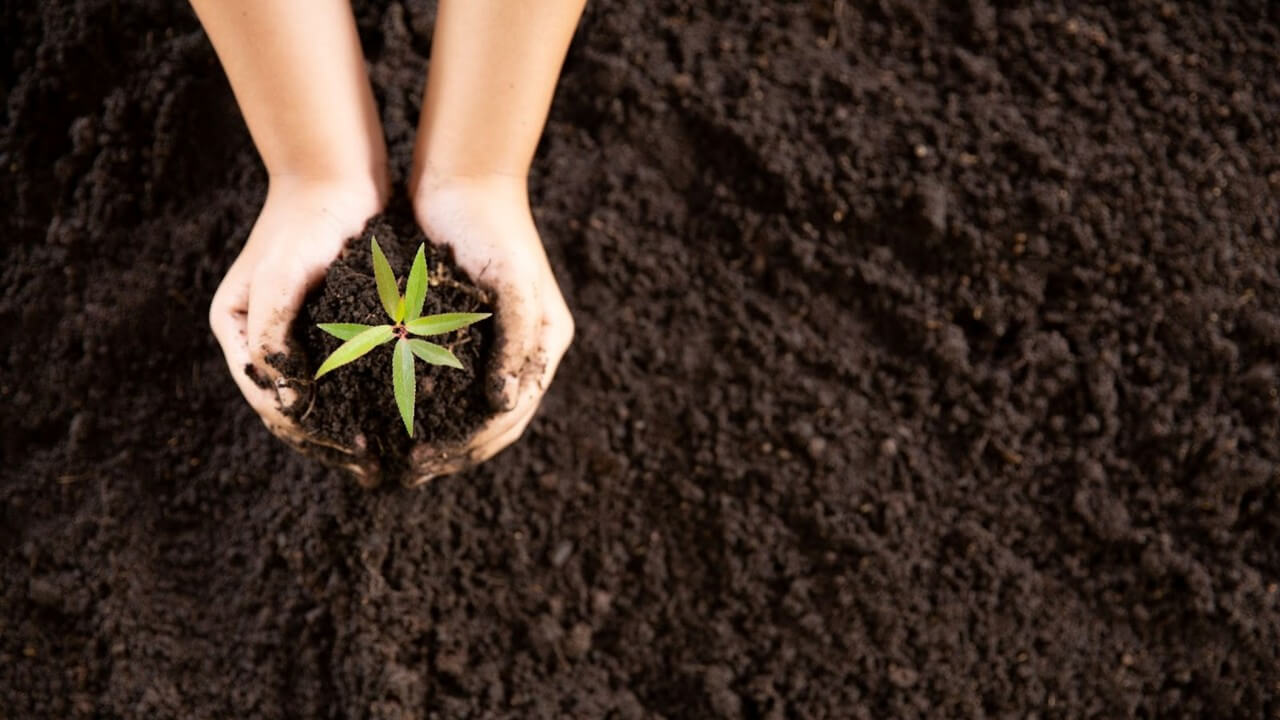
Long-term use of chemical fertilisers can damage soil health, causing reduced fertility, weaker plant roots, and lower crop yields. This article discusses how proper soil treatment using effective organic fertilisation, such as INO Nature’s Super Bio-C and Bio-N, can restore soil structure, improve nutrient availability, and support sustainable long-term crop productivity.
Why Soil Treatment Is Critical for Malaysian Farms
Implementing proper soil treatment is essential to restore soil structure, enhance fertility, and support sustainable planting. INO Nature applies the principle of Fair Trade for Living Soil, supplying nutrients based on the actual needs of the soil and plants rather than overloading them with fertilisers. By using organic fertilisers from INO Nature, farmers can rejuvenate their land, improve plant growth, and secure long term yield for years to come.
Despite the benefits of proper soil treatment, many farmers in Malaysia are experiencing declining crop yields despite long term use of chemical fertilisers. Over time, this can damage soil health, leading to problems such as acidic soil, compacted soil, or saline conditions. As reported by The Star, soil in Malaysia’s farming areas including padi fields, oil palm plantations and vegetable plots is now depleted in organic matter and beneficial microbes and has grown more acidic after many years of excessive fertiliser application. Unhealthy soil not only limits nutrient absorption but also increases the risk of pests and diseases, which ultimately affects overall crop production.

Common Soil Problems Caused by Long-Term Chemical Fertiliser Use
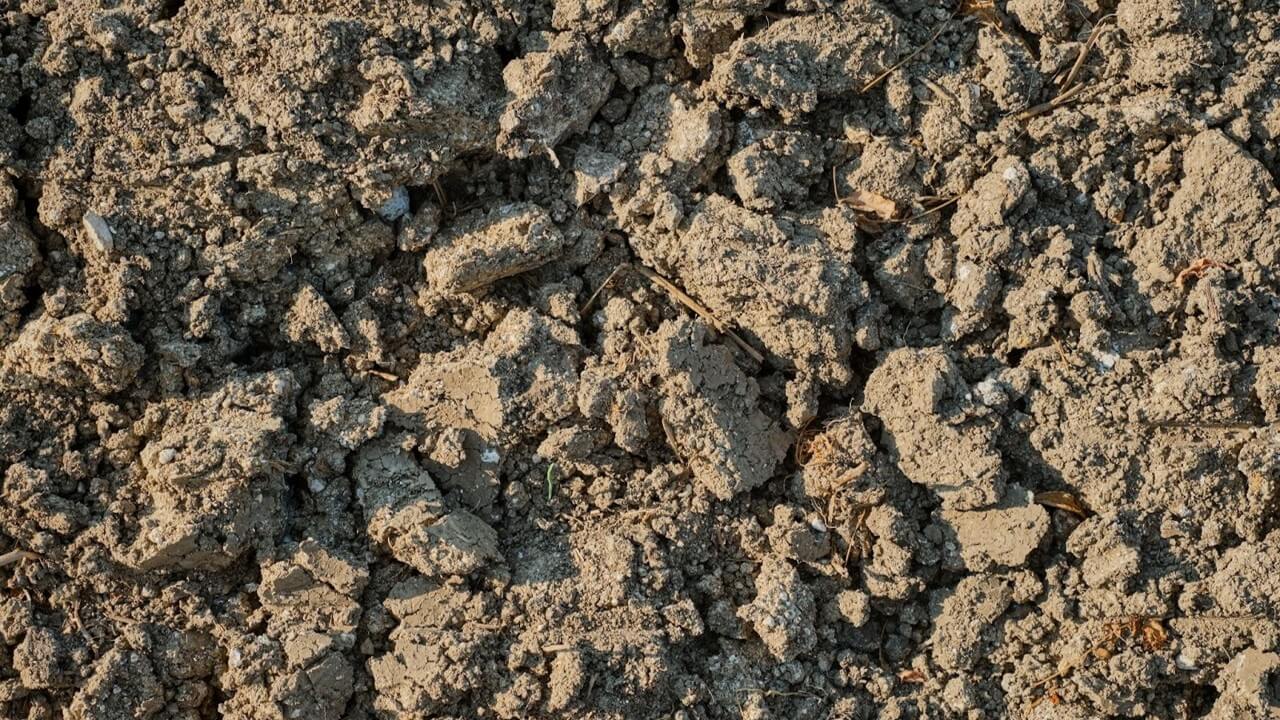
Long term use of chemical fertilisers can lead to common soil problems such as acidification, compaction, and salinisation. These issues reduce soil fertility, restrict root growth, and lower crop yields over time. As noted in a review of Malaysian agriculture research, excessive chemical fertiliser use has contributed to soil degradation by reducing microbial diversity, a key indicator of long‑term soil fertility.
One of the major impacts of long term chemical fertiliser use is soil acidification, where the soil pH gradually becomes too low for optimal plant growth. This happens when repeated fertiliser application alters the natural nutrient balance in the soil, leading to an increase in acidic elements over time. When soil becomes too acidic, essential nutrients such as Nitrogen (N), Phosphorus (P), Potassium (K), Calcium (Ca) and Magnesium (Mg) become less available for plant uptake. The imbalance also affects beneficial soil microorganisms that support nutrient cycling and root development. As soil acidity worsens, plant roots may become weaker and less efficient in absorbing nutrients and water, resulting in slower growth, lower resistance to stress, and reduced crop yield. This problem often develops gradually after many planting cycles, especially in farms that rely heavily on chemical fertilisers without proper soil recovery.
Long term and excessive application of chemical fertilisers can gradually weaken soil structure and reduce organic matter content, leading to soil compaction over time. Soil compaction occurs when soil particles are pressed closely together, reducing pore spaces and causing the soil to become dense and hard. When soil becomes compacted, aeration and water movement are limited, and microbial activity in the soil declines. As a result, plant roots find it difficult to penetrate the hardened soil, restricting their ability to absorb water and nutrients effectively. Over time, this leads to weaker root development, slower plant growth, and reduced crop yield, especially when the soil is not properly restored between planting cycles.
Excessive and prolonged use of chemical fertilisers can gradually cause soil salinisation, where salts build up in the soil and disrupt plant growth. When mineral salts accumulate faster than plants can absorb them or rainfall can wash them away, the soil becomes less suitable for healthy roots. High salt levels make it harder for plants to take up water and nutrients, leading to weaker growth, leaf damage, and lower productivity. Over time, salinised soil can significantly reduce crop yield and compromise long-term soil health.
Impact of Poor Soil Condition on Crop Production
Poor soil condition limits plant growth and nutrient absorption, making crops more vulnerable to pests and diseases. This can reduce yields, lower crop quality, and increase long-term farming costs.
Poor soil condition weakens plant roots and reduces natural resistance, making crops more susceptible to pests and diseases. Over time, infestations become more frequent and harder to manage, affecting overall crop health and productivity. For example, studies on Malaysian oil palm soils show that use of chemical fertilisers can lead to conditions such as increased soil acidity and weakened plant roots, making them more vulnerable to harmful diseases.
When soil structure and fertility are poor, nutrients from fertilisers are not fully absorbed by plants. This reduces the effectiveness of fertiliser applications, meaning farmers get less benefit from each treatment while increasing input costs.
Unhealthy soil limits root growth, water absorption, and nutrient uptake, resulting in stunted plants, smaller fruits or grains, and lower overall yield. Crop quality may also suffer, affecting market value and profitability.
Continuous poor soil condition forces farmers to spend more on fertilisers, pesticides, and soil amendments to maintain productivity. Without proper soil management, operational costs increase while returns decline, threatening long-term sustainability.
Why Restoring Soil Health Matters for Long-Term Yield
Restoring soil health is essential for strong plant growth, better nutrient and water absorption, and long-term crop productivity. Healthy soil also helps reduce pest and disease risks and supports sustainable yields over time.
- Restore soil structure and improve fertility
- Enhance nutrient and water uptake
- Strengthen plant root development
- Reduce pest and disease risks
- Support sustainable long-term yield
- Maintain healthy soil microbial activity
Effective Organic Fertilisation for Healthy Soil and Sustainable Yields
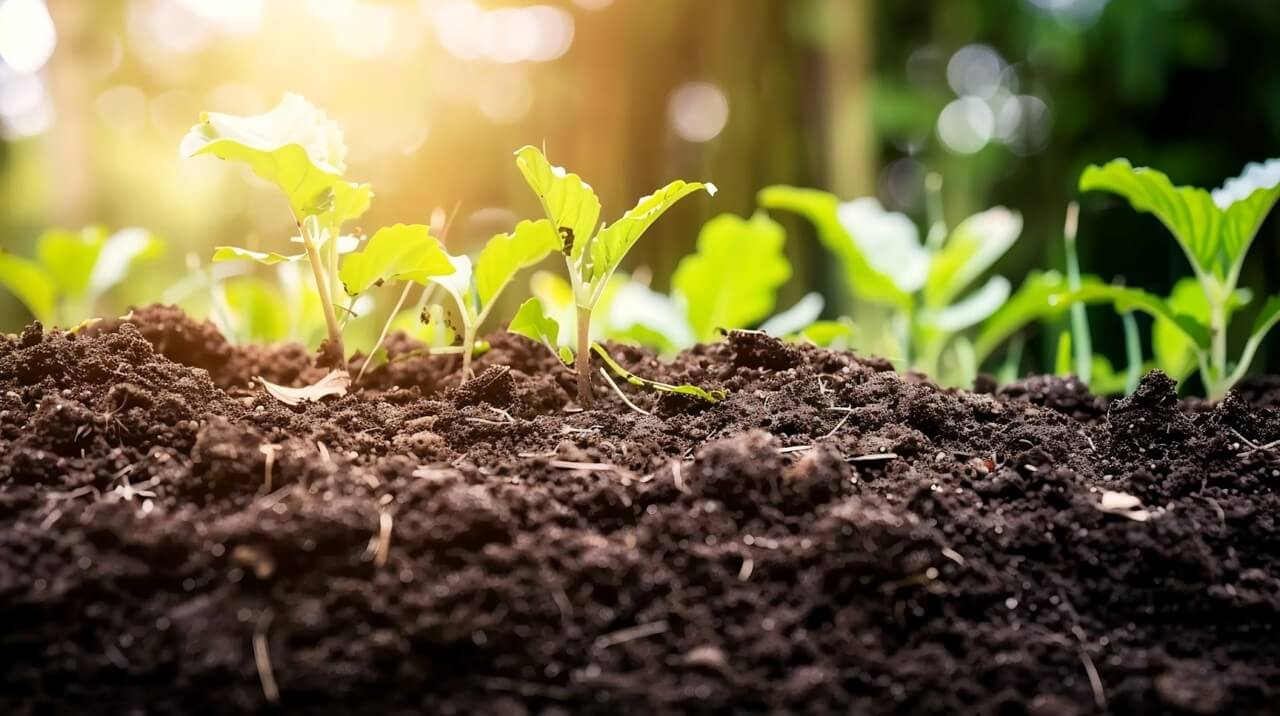
Restoring soil health is key to sustainable planting and long-term crop productivity, and effective organic fertilisation plays a vital role in achieving this. For many years, Malaysian farmers have relied heavily on chemical fertilisers to increase crop yield, often neglecting soil health. INO Nature promotes the principle of Fair Trade for Living Soil, supplying nutrients based on the actual needs of the soil and plants instead of overloading them. Organic fertilisers such as Super Bio-C and Bio-N from INO Nature help replenish organic matter and beneficial microorganisms in the soil, reviving soil health, maintaining a healthy ecosystem, and supporting sustainable long-term crop production.
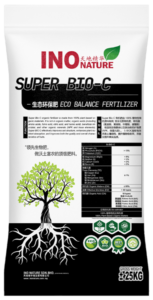
Super Bio-C is proven to improve poor soil conditions such as clay soil, low nutrient availability, and low organic matter content. It is rich in natural major nutrients including nitrogen, phosphorus, and potassium, along with essential trace elements, organic matter, and beneficial microorganisms that support overall soil health. With consistent application at the right dosage, Super Bio-C helps improve soil structure, regulate soil pH, and replenish essential nutrients needed for healthy plant growth.
Formulated with an ultra-fine particle size of approximately ±100 µm, Super Bio-C can penetrate deeper into the soil, allowing faster soil activation and more effective nutrient distribution. Its highly concentrated formulation means only a small amount is required, making it more economical compared to conventional organic fertilisers. For example, for mature trees over 5 years old, the average application rate is only 3 kg per tree, with one pack covering up to 8 trees, whereas other common brands in the market may require up to 10 kg per tree and several packs to achieve similar results.
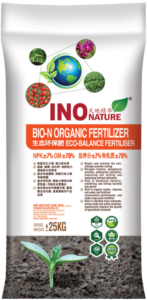
Bio-N is a 100% plant-based organic fertiliser that improves soil condition safely without using animal-based materials that can attract harmful bacteria or viruses. It is packed with natural nutrients, trace elements, and beneficial microorganisms, and contains about 70% organic matter to restore soil fertility, balance soil pH, and improve aeration and water retention. Made in fine powder form, Bio-N penetrates the soil quickly, making it highly efficient even at low application rates. Its concentrated formula is very economical. For young trees under 2 years old, the average application is just 1kg per tree, allowing one pack to cover up to 25 trees, compared with other brands that may require 5kg per tree and only cover 5 trees per pack.
Frequently Asked Questions (FAQs)
Long-term and excessive use of chemical fertilisers can gradually damage soil health by causing problems such as soil acidification, compaction, and salinisation. These conditions reduce organic matter, weaken soil structure, and limit nutrient availability, which can eventually lower crop yields and increase farming costs.
Common signs that soil may need treatment include declining crop yields, hard or compacted soil, poor water absorption, weak root growth, yellowing leaves, lower fertiliser effectiveness, and more frequent pest or disease problems. A soil test is the best way to confirm soil condition and nutrient balance.
Soil treatment helps restore soil structure, improve nutrient and water uptake, and support beneficial microbial activity. Healthy soil allows roots to grow better, improves plant resilience, and supports more stable yields over time, making farming more sustainable in the long run.
Yes, effective organic fertilisation can help improve soil condition by replenishing organic matter, supporting beneficial microorganisms, and improving soil aeration and water retention. With proper application and soil management, organic fertilisers can play an important role in restoring soil health and improving long-term productivity.
Super Bio-C and Bio-N are both organic fertilisers designed to support soil health, but they are formulated for different soil and crop needs.
- Super Bio-C is positioned for improving poor soil conditions and supporting nutrient recovery in challenging soils.
- Bio-N is a 100% plant-based organic fertiliser with high organic matter content that helps improve soil fertility, aeration, and water retention.
The best option depends on crop stage, soil condition, and application goals. Contact us to learn more.
Effective soil treatment isn’t about immediate replacement, but about restoring the soil’s ability to work. Using INO Nature allows you to reduce chemical dependency while increasing overall nutrient efficiency.
Sustainable Farming Starts with Healthy Soil
Healthy soil is the foundation of sustainable planting and long-term crop productivity. Long-term reliance on chemical fertilisers can lead to soil acidification, compaction, and salinisation, which reduce nutrient uptake, increase pest and disease risks, and lower crop yields. By adopting effective organic fertilisation such as INO Nature’s Super Bio-C and Bio-N, farmers can restore soil structure, replenish organic matter, and maintain a thriving soil ecosystem. This approach strengthens plant growth, improves crop quality, and ensures stable, sustainable yields for years to come.
Looking for an effective soil treatment solution in Malaysia? Explore INO Nature’s Super Bio-C and Bio-N organic fertilisers designed to restore soil health, improve nutrient efficiency, and support sustainable long-term yields.
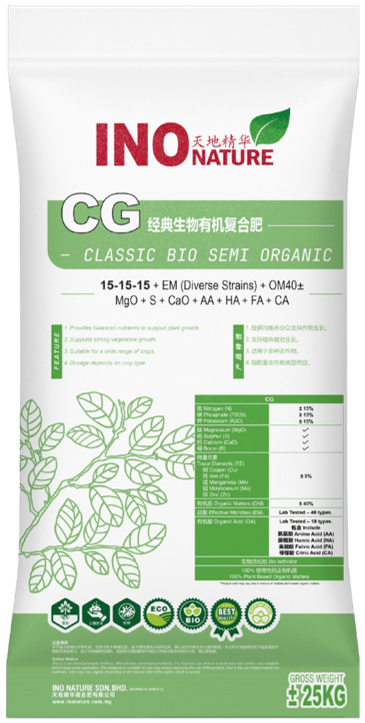
Super Bio-C
Super Bio-C is proven to improve poor soil conditions such as clay soil, low nutrient availability, and low organic matter content.
It is rich in natural major nutrients including nitrogen, phosphorus, and potassium, along with essential trace elements, organic matter, and beneficial microorganisms that support overall soil health. With consistent application at the right dosage, Super Bio-C helps improve soil structure, regulate soil pH, and replenish essential nutrients needed for healthy plant growth.
Formulated with an ultra-fine particle size of approximately ±100 µm, Super Bio-C can penetrate deeper into the soil, allowing faster soil activation and more effective nutrient distribution. Its highly concentrated formulation means only a small amount is required, making it more economical compared to conventional organic fertilisers. For example, for mature trees over 5 years old, the average application rate is only 3 kg per tree, with one pack covering up to 8 trees, whereas other common brands in the market may require up to 10 kg per tree and several packs to achieve similar results.
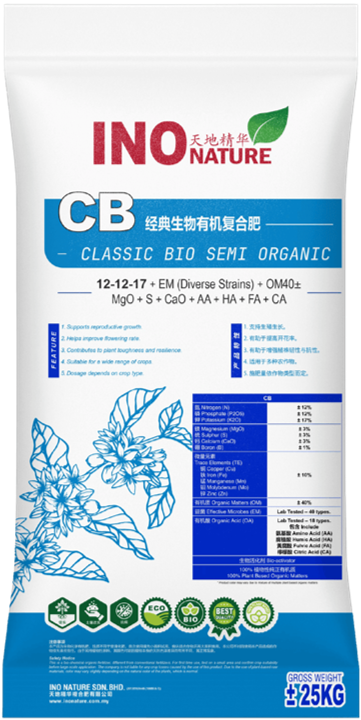
Bio-N
Bio-N is a 100% plant-based organic fertiliser that improves soil condition safely without using animal-based materials that can attract harmful bacteria or viruses.
It is packed with natural nutrients, trace elements, and beneficial microorganisms, and contains about 70% organic matter to restore soil fertility, balance soil pH, and improve aeration and water retention. Made in fine powder form, Bio-N penetrates the soil quickly, making it highly efficient even at low application rates. Its concentrated formula is very economical. For young trees under 2 years old, the average application is just 1kg per tree, allowing one pack to cover up to 25 trees, compared with other brands that may require 5kg per tree and only cover 5 trees per pack.